Cosmetic Sample Video Ad Script Template: A 15-Second Sampling Funnel

Summarize with
Summary
Use this cosmetic sample video ad script template to turn a beauty sample offer into a clear 15-second hook, demo, lead capture, and CTA. Build and test variants with AdsTurbo.
By adsturbo.ai | Published 2026-11-07 | Updated 2026-11-07
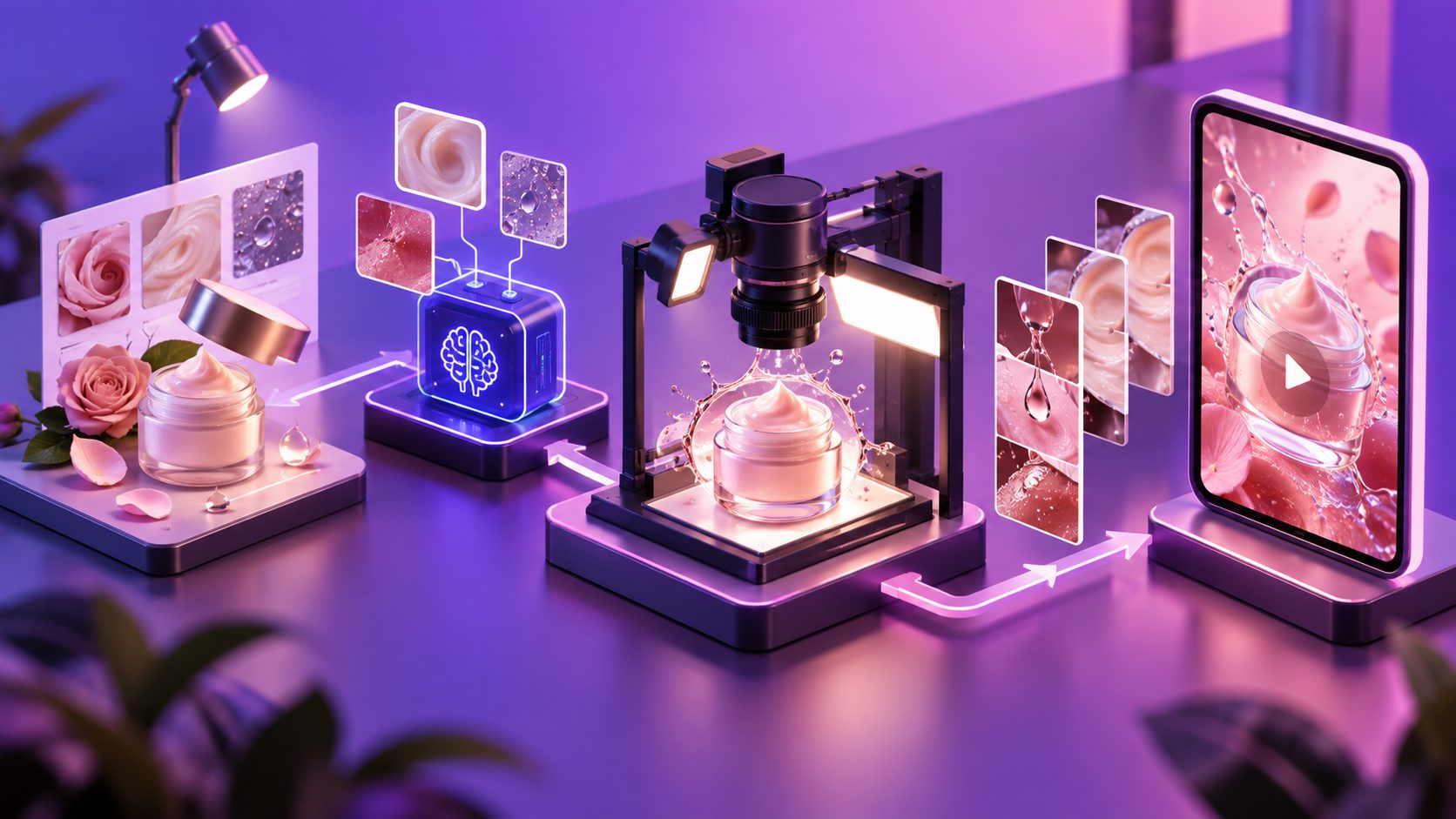
A cosmetic sample video ad script template should do more than show an attractive product. It must quickly explain who the sample is for, what the viewer receives, why the offer is worth requesting, and what to do next. The strongest format is usually a short sequence of hook, product proof, sample offer, qualification, and CTA.
This guide provides a reusable 15-second script for skincare, makeup, haircare, and other permitted beauty products. It also adds a practical testing framework: treat the sample request as a lead-generation funnel, not simply a product showcase.
What is a cosmetic sampling video ad?
A cosmetic sampling video ad is a short promotional video that invites a defined audience to request, claim, or apply for a product sample. It may promote a free sample, trial-size product, discovery kit, or limited sampling opportunity.
The video needs to answer four questions almost immediately:
- What product is this?
- Why might I want to try it?
- What do I need to do to request the sample?
- Is the offer relevant and credible for me?
Many UGC script guides use a familiar structure: hook, problem, product, demonstration, proof, and call to action. (admapix.com) For sampling campaigns, one extra element matters: request friction. If viewers do not understand the form, eligibility, shipping condition, or next step, strong creative can still produce weak lead quality.
A 15-second cosmetic sample video ad script template
Use the following template as a production brief. Replace bracketed text with approved product facts and offer terms.
| Time | Visual direction | Voiceover or dialogue | On-screen text |
|---|---|---|---|
| 0–2 sec | Creator holds the product or shows the beauty concern in a natural setting | “Want to try [product type] before committing to the full size?” | “Try [product type] first” |
| 2–5 sec | Close-up of packaging, texture, swatch, or application | “This sample is made for [specific audience or use case].” | “[Audience] sample available” |
| 5–8 sec | Show one simple use moment: dispense, swipe, apply, or compare shades | “Here’s how it fits into a simple [routine/use] step.” | “Simple [routine] step” |
| 8–11 sec | Show sample packaging, discovery kit, or request page | “Request your [sample size/trial kit] while the offer is open.” | “Request a sample” |
| 11–15 sec | Product hero shot followed by a clear tap or form action | “Tap to check eligibility and submit your request.” | “Check eligibility → Request now” |
Important: Keep claims tied to what the product can substantiate. Demonstrate texture, shade, application, packaging, routine placement, or scent description only when accurate. Do not imply guaranteed skin results from a sample video.
How to adapt the script for different beauty products
The same sampling structure can support different creative angles, but the proof shot should change according to the product.
Skincare sample
Lead with routine fit rather than an exaggerated transformation.
Example script:
“Trying to simplify your evening routine? This [cleanser/serum/moisturizer] sample lets you test the texture and application before choosing a full size. See how it fits into your routine, then tap to request yours.”
Recommended visuals include the bottle, dispensing amount, texture on the hand, and application order. If the product requires specific usage instructions, make those instructions clear on the landing page and avoid suggesting that a single sample proves long-term performance.
Makeup sample
Use shade selection, finish, or application as the central proof.
Example script:
“Not sure which finish suits your routine? Try [product] in a sample format, see the texture in natural light, and choose with more confidence. Tap to check the available sample options.”
Show the product in natural lighting and keep the shade name readable. A split-screen can compare finishes, but it should not create a misleading impression through different lighting or filters.
Haircare sample
Focus on the routine, format, and sensory experience.
Example script:
“Looking for a new step in your wash-day routine? Try this [shampoo/mask/styling product] sample and see how it fits your routine before buying the full size. Tap to request yours.”
Show the amount used, hair type or use context, and the product format. Avoid universal statements such as “works for everyone” unless the claim is properly supported.
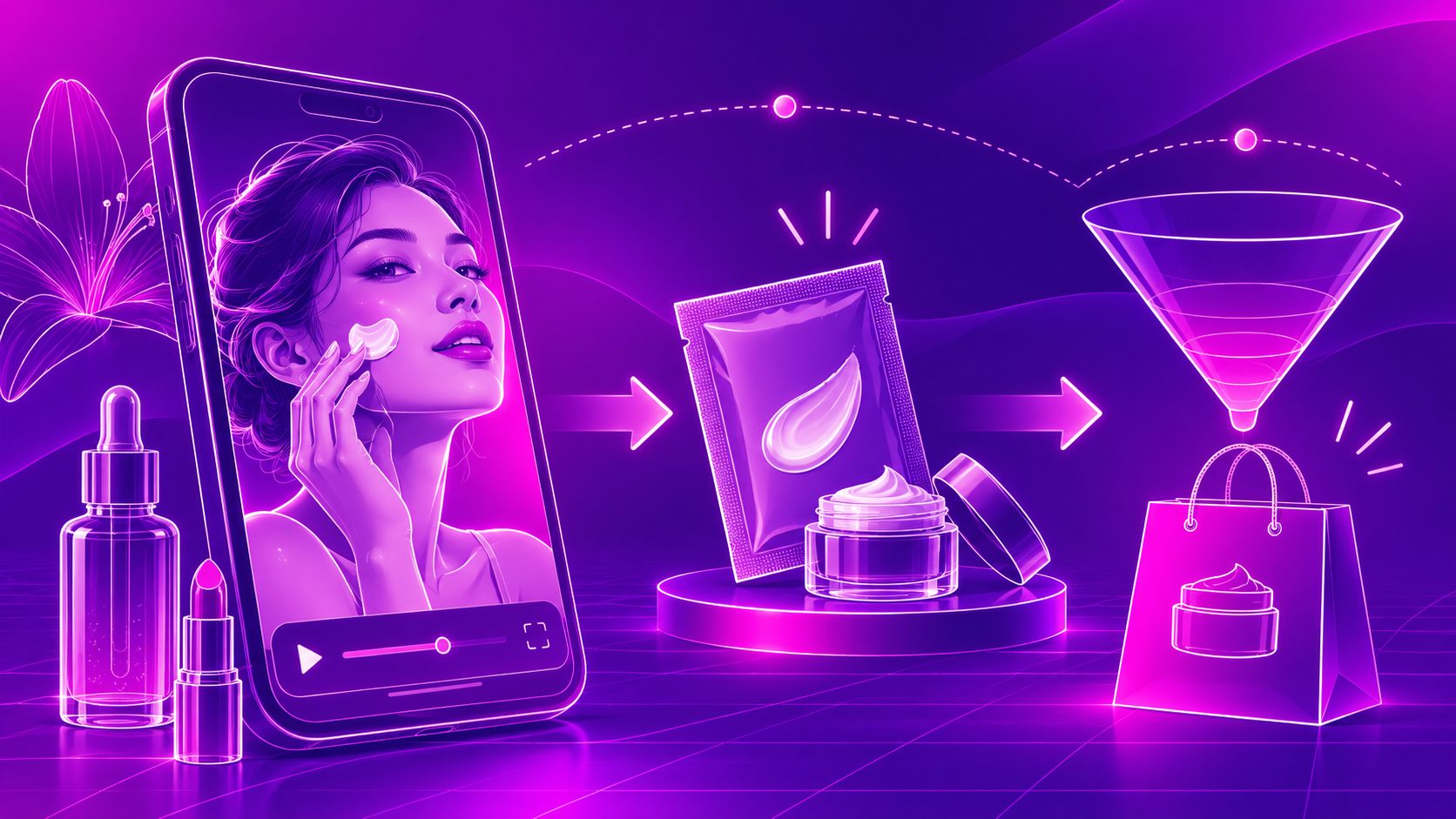
The sampling funnel: the missing part of most scripts
A sampling ad has two audiences: the person who watches the video and the team that must process the resulting request. That means the creative should be designed around lead quality, not only click-through rate.
Use this five-part funnel:
- Attention: Present a relevant question or product situation in the first two seconds.
- Relevance: State who the sample is intended for.
- Proof: Show the product, texture, shade, use step, or package clearly.
- Qualification: Mention a real condition, such as region, age requirement, survey completion, or limited availability, when applicable.
- Action: Tell the viewer exactly what happens after the tap.
A useful operational distinction is to separate the creative CTA from the form CTA. The video can say “Request a sample,” while the form confirms eligibility, delivery details, and any required consent. This keeps the video short without hiding important conditions.
Three hook variants to test
Do not rewrite the whole ad for every test. Keep the product demonstration and request flow stable while changing only the opening angle.
| Hook type | Example opening | Best for |
|---|---|---|
| Trial-first | “Want to try it before buying the full size?” | Lower-commitment audiences |
| Problem-first | “Still choosing between products that feel too heavy or too light?” | Routine or texture concerns |
| Discovery-first | “This is the sample I would request before changing my routine.” | Product discovery campaigns |
A practical test sequence is to produce three hooks, one demonstration, and two CTAs. That creates six controlled variants without changing every production variable at once. Track not only video views and clicks, but also:
- Sample request completion rate
- Cost per qualified request
- Form abandonment rate
- Geographic or demographic eligibility rate
- Follow-up purchase rate, if measurable
This is the article’s core testing insight: the winning sample ad is not necessarily the one with the cheapest click. It is the one that produces the most useful eligible requests at an acceptable cost.
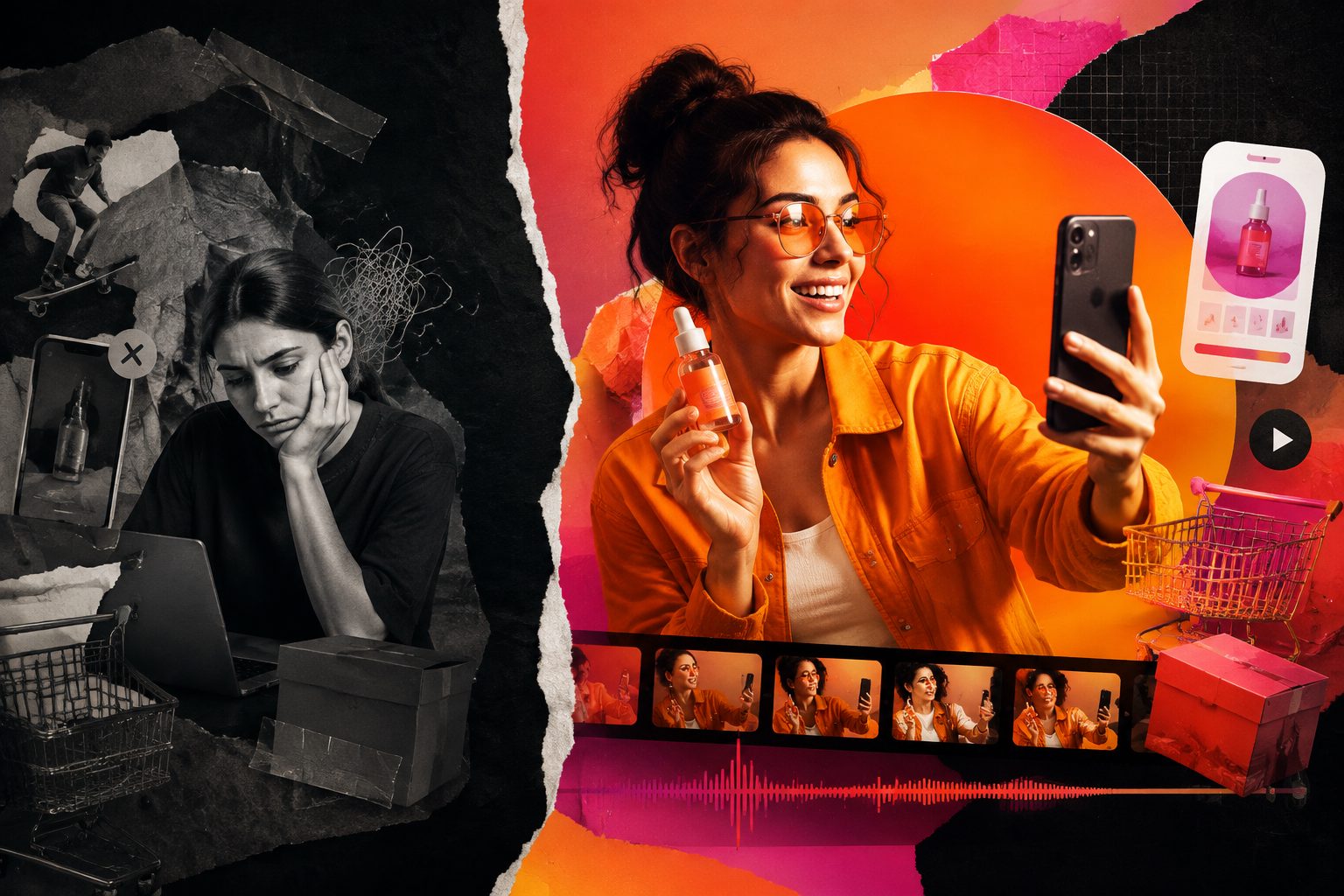
How to make the video feel native without losing control
A sampling ad should feel personal, but the brief still needs boundaries. Give the creator or editor three layers of direction:
- Locked facts: Product name, sample terms, eligibility, offer dates, and approved claims.
- Flexible language: Personal transitions, facial reactions, and natural wording.
- Required shots: Product label, texture or use, sample package, and final CTA.
This approach avoids two common failures. A completely open brief can produce vague videos with missing offer details, while a word-for-word script can sound unnatural. A creator-style format works best when the facts are controlled but the delivery remains conversational. (help.insense.pro)
For ecommerce teams producing several variants, AdsTurbo can support product video creation from JPG or PNG product images, as well as ad creative variation workflows. Product images with a clear subject and plain background are generally easier to use consistently across generated scenes. You can also use an ecommerce ad creative variation workflow to structure hook and offer tests.
Production checklist before launch
Before publishing a cosmetic sample ad, confirm:
- The product name is readable on mobile.
- The sample offer is accurately described.
- The CTA matches the landing-page action.
- Eligibility or shipping conditions are not hidden.
- Product texture, shade, and usage are shown honestly.
- On-screen captions match the spoken message.
- The first two seconds work with sound off.
- The final frame remains visible long enough to read.
- The video is exported in the intended social format.
For multilingual sampling campaigns, translate the spoken script, captions, offer conditions, and form instructions together. Translating only the voiceover can create mismatched promises. AdsTurbo supports video translation, subtitles, and localization workflows for adapting creative across markets.
A sample campaign can also benefit from repurposing. A 30-second product explanation may be cut into shorter versions for paid social, product pages, and retargeting, provided that the shortened edit preserves the context of any claim. See this ecommerce product video workflow for cold-start testing for a related product-focused production approach.
Frequently asked questions
How long should a cosmetic sample video ad be?
A 15-second version is a useful starting point for a simple sampling offer. Use a longer cut when the product needs more explanation, shade education, or qualification details. The first two seconds should still establish relevance.
Should the sample offer appear at the beginning?
Not always. A trial-first hook can work well for low-commitment audiences, while a problem-first hook may create stronger relevance. Test both while keeping the demonstration and CTA consistent.
What should the CTA say?
Use a specific action such as “Request a sample,” “Check sample eligibility,” or “Apply for the discovery kit.” Avoid vague endings such as “Learn more” when the goal is a completed request.
Can one script work for skincare and makeup?
Yes, the structure can stay the same, but the proof must change. Skincare often needs routine and texture context, while makeup benefits from shade, finish, and application visuals.
How can brands create more variations efficiently?
Start with one approved script, then change one variable at a time: hook, creator style, product angle, language, or CTA. AdsTurbo also provides clip-by-clip editing, subtitles, product image generation, and API access for teams building repeatable creative workflows.
Final template to copy
Hook: Want to try [product] before buying the full size?
Audience: This sample is for [specific audience or use case].
Proof: Show [texture, shade, application, package, or routine step].
Offer: Request [sample/trial kit] under [accurate condition].
CTA: Tap to check eligibility and submit your request.
Use the template as a controlled starting point, then build multiple hooks and measure qualified sample requests—not just views. That turns a cosmetic sampling video from a product showcase into a repeatable acquisition test.