Crowdfunding Pre Launch Video Email List Lead Generation: A Teaser and Landing Page Framework

Summarize with
Summary
Build a crowdfunding pre-launch video and email list funnel with teaser scripts, landing-page structure, launch emails, and practical testing steps. Start planning.
By adsturbo.ai | Published 2026-11-02 | Updated 2026-11-02
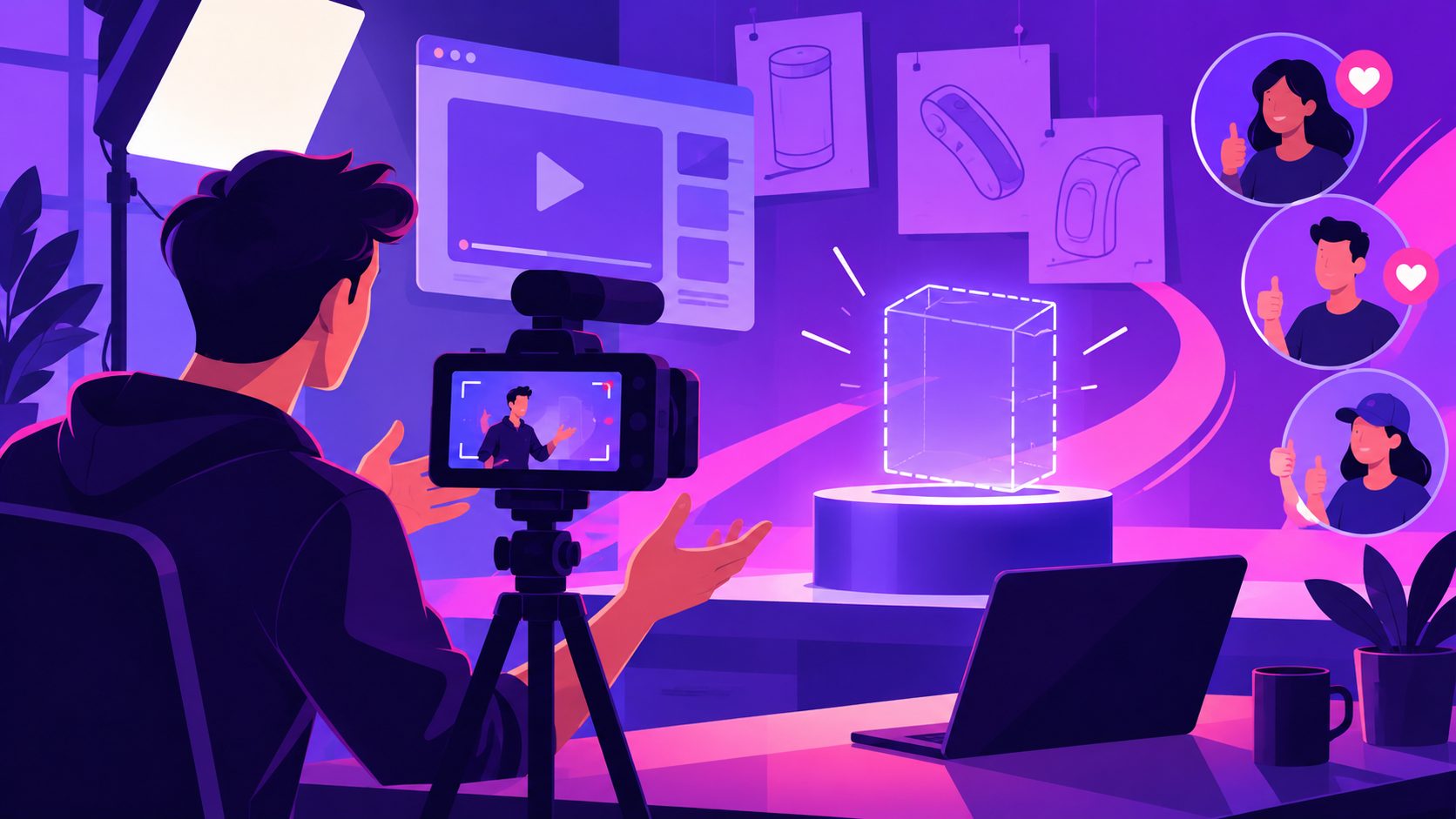
Crowdfunding pre launch video email list lead generation works best when the video and landing page perform one job together: turn curiosity into a permission-based relationship before the campaign opens. A strong teaser does not try to explain every feature. It creates a clear reason to subscribe, while the page makes the next action fast, specific, and credible.
Kickstarter recommends using a short video or animation on a pre-launch page, while also considering an independent landing page for collecting email addresses. Its pre-launch system can notify followers at launch, but creators cannot directly contact those followers themselves. (updates.kickstarter.com)
What should a crowdfunding pre-launch video do?
A crowdfunding pre-launch video is a short proof-and-curiosity asset designed to earn an email signup before the Kickstarter or Indiegogo campaign goes live. Its goal is not immediate funding. Its goal is to make the viewer understand the problem, want the product, and believe that subscribing gives them a meaningful advantage.
A useful teaser usually answers four questions within 20–45 seconds:
- What problem is frustrating the audience?
- What is the new product or experience?
- Why is it different from familiar alternatives?
- What will the subscriber receive or unlock?
The strongest structure is often:
| Time | Video job | Example content |
|---|---|---|
| 0–3 seconds | Interrupt attention | Show the frustrating use case or unexpected result |
| 3–10 seconds | Name the problem | Demonstrate the cost, inconvenience, or limitation |
| 10–25 seconds | Reveal the solution | Show the product in use, not only a polished hero shot |
| 25–35 seconds | Build anticipation | Mention launch timing, early access, or a founder story |
| Final seconds | Give one CTA | “Join the launch list” or “Get first access” |
This framework is more useful than simply saying “make a compelling video” because it assigns every second a conversion role. It also prevents a common mistake: spending the entire teaser on product beauty shots and leaving no time to explain why the viewer should subscribe.
How should the teaser and landing page work together?
The video creates desire; the landing page resolves uncertainty. The landing page should repeat the promise from the video rather than introduce a different campaign angle.
Use this above-the-fold sequence:
- Headline: State the product benefit in one sentence.
- Supporting line: Explain who the product is for and why the launch matters.
- Video: Place the teaser near the headline, with captions for silent viewing.
- Email form: Ask for the minimum information needed, usually an email address.
- CTA: Use a specific action such as “Get launch-day access.”
- Trust details: Add a product image, founder context, expected launch window, or privacy note.
Kickstarter’s own guidance emphasizes a clear project explanation, a direct notification action, and the value of sharing the pre-launch page. It also recommends making the launch date and time visible so visitors understand what they are signing up for. (updates.kickstarter.com)
A separate landing page gives you more control over email capture and follow-up. It also lets you test different messages, traffic sources, and audience segments without changing the core campaign page.
What should the video script say?
A practical teaser script should combine a visible product moment with a precise subscription benefit. This example can be adapted for consumer electronics, home products, accessories, and other permitted ecommerce categories:
“Most [target users] still struggle with [specific problem]. We built [product name] to make [desired outcome] simpler, faster, or more reliable. Here is how it works: [show the product in use]. We are preparing to launch on [Kickstarter or Indiegogo]. Join the launch list to get the first announcement, campaign details, and access to the earliest offer.”
The script should avoid unsupported claims such as “revolutionary,” “guaranteed,” or “the best ever.” Replace vague superiority with visible evidence:
- Show the product solving the problem.
- Show the relevant size, material, interface, or movement.
- Demonstrate the before-and-after experience.
- Display one concrete differentiator.
- Use on-screen text to reinforce the spoken message.
For cross-border campaigns, produce separate versions for major markets instead of placing too many languages into one crowded frame. AdsTurbo supports video translation, subtitles, lip sync, character replacement, and video upscaling, which can help adapt a core concept into localized creative variants. Keep the promise consistent while changing the voice, captions, examples, or presenter where appropriate.
How do you turn subscribers into launch-day backers?
Email collection is only valuable when the sequence prepares people to act. Indiegogo’s campaign guidance recommends building the list before launch and using a clear email plan around the campaign opening. Its published strategy suggests messages approximately one week before launch, the day before, on launch day, and later for people who have not contributed. (entrepreneur.indiegogo.com)
A compact sequence looks like this:
- Welcome email: Confirm what the subscriber will receive and explain the product problem.
- Proof email: Share a prototype detail, test result, founder story, or behind-the-scenes decision.
- Reminder email: State the launch date, time, platform, and early-access benefit.
- Launch email: Use one prominent campaign link and one primary CTA.
- Follow-up email: Answer a common objection and remind non-backers of the relevant deadline.
Each email should have one main action. Multiple competing links can dilute attention, especially on mobile. Indiegogo specifically advises keeping the action clear and using product imagery in campaign emails. (entrepreneur.indiegogo.com)
Segment the list when possible. For example, people who watched the teaser but did not subscribe need a different message from subscribers who opened three emails but did not click. This creates a more useful testing loop than sending the same reminder to everyone.
What should you test before spending heavily?
The most valuable pre-launch test is not only the video view rate. It is the relationship between qualified clicks, email signups, and downstream campaign actions.
Use a simple testing matrix:
| Test | Version A | Version B | Decision signal |
|---|---|---|---|
| Hook | Pain-point opening | Product reveal opening | Qualified watch-through |
| CTA | “Join the launch list” | “Get early access” | Signup rate |
| Offer | Launch notification | Early-bird information | Signup quality |
| Landing page | Product-first | Problem-first | Signup conversion |
| Audience | Broad interest | Specific use case | Cost per qualified lead |
A useful original operating rule is the 3-layer match test: the first three seconds of the video, the headline above the form, and the email welcome subject line should express the same core promise. If those three elements diverge, the visitor may click but still hesitate to subscribe.
Track at least these events:
- Video landing-page click-through rate
- Form-start rate
- Form-completion rate
- Cost per qualified subscriber
- Welcome-email click rate
- Launch-day campaign click rate
- Contribution rate by acquisition source
This helps separate a cheap but unqualified audience from a smaller group that is genuinely interested in backing the product.
How can you produce more teaser variants efficiently?
A crowdfunding team usually needs several versions for different audiences, placements, and languages. Start with one approved narrative, then vary only one major element at a time:
- Hook
- Presenter or character
- Product benefit
- On-screen text
- CTA
- Aspect ratio
- Language
- Background or scene
AdsTurbo can support this production workflow through Ad Clone, Product Video, Video Subtitle, Video Translation, AI Upscaling, Background Replace, and Character Swap tools. Its Ad Clone workflow can analyze a reference video up to 12 seconds and generate advertising variations, making it useful for studying pacing, shot order, and CTA structure before rebuilding the concept for your own product.
For platform delivery, prepare vertical, square, and landscape versions rather than cropping one master file repeatedly. AdsTurbo Ad Clone supports 9:16, 1:1, and 16:9 outputs, while Event Poster supports nine aspect ratios for promotional visuals across social, display, email, and print placements.
For a broader creative workflow, see the guide to crowdfunding early-bird video ad scripts. If your campaign depends on product demonstrations, the waterproof demonstration video ad guide shows how proof can replace generic product claims. For multi-channel publishing, video-to-URL workflows for Shopify and Meta Ads can help organize direct video links.
Common questions
Should the video be on Kickstarter or on an independent landing page?
Use both when possible, but give them different jobs. The Kickstarter pre-launch page supports platform-native followers and launch notifications. An independent landing page lets you collect and segment your own email audience for continued communication. Kickstarter notes that creators cannot directly contact people who only opt in through its notification system. (updates.kickstarter.com)
How long should a crowdfunding teaser video be?
For paid or social traffic, begin by testing 20–45 seconds. The correct length depends on product complexity, but the opening should communicate the problem immediately. Longer videos can work when the product needs a demonstration, provided the CTA is not delayed until the final frame.
What incentive should subscribers receive?
Offer a clear, honest benefit: launch-day notification, early-bird information, exclusive updates, or access to a limited campaign perk. The incentive should be real and easy to understand. Do not make the signup promise more specific than the campaign can fulfill.
Should one video target every audience?
Use one core story, but create audience-specific openings and examples. A commuter, parent, hobbyist, and professional buyer may care about different outcomes even when they are considering the same product.
Can AI help create localized variants?
Yes, when used as a controlled production system rather than a replacement for campaign strategy. Keep the product facts, offer terms, and CTA consistent. Localize narration, subtitles, presenters, and examples only after the original message is clear.
Final checklist
Before driving traffic to the page, confirm that:
- The first three seconds show a recognizable problem or product moment.
- The landing-page headline matches the video promise.
- The form asks for minimal information.
- The signup benefit is specific and truthful.
- The launch date and platform are easy to find.
- Captions work without sound.
- Each traffic source has a trackable link.
- The welcome email is ready before paid promotion begins.
- At least two hooks and two CTAs have been tested.
- The campaign team knows which subscribers should receive each message.
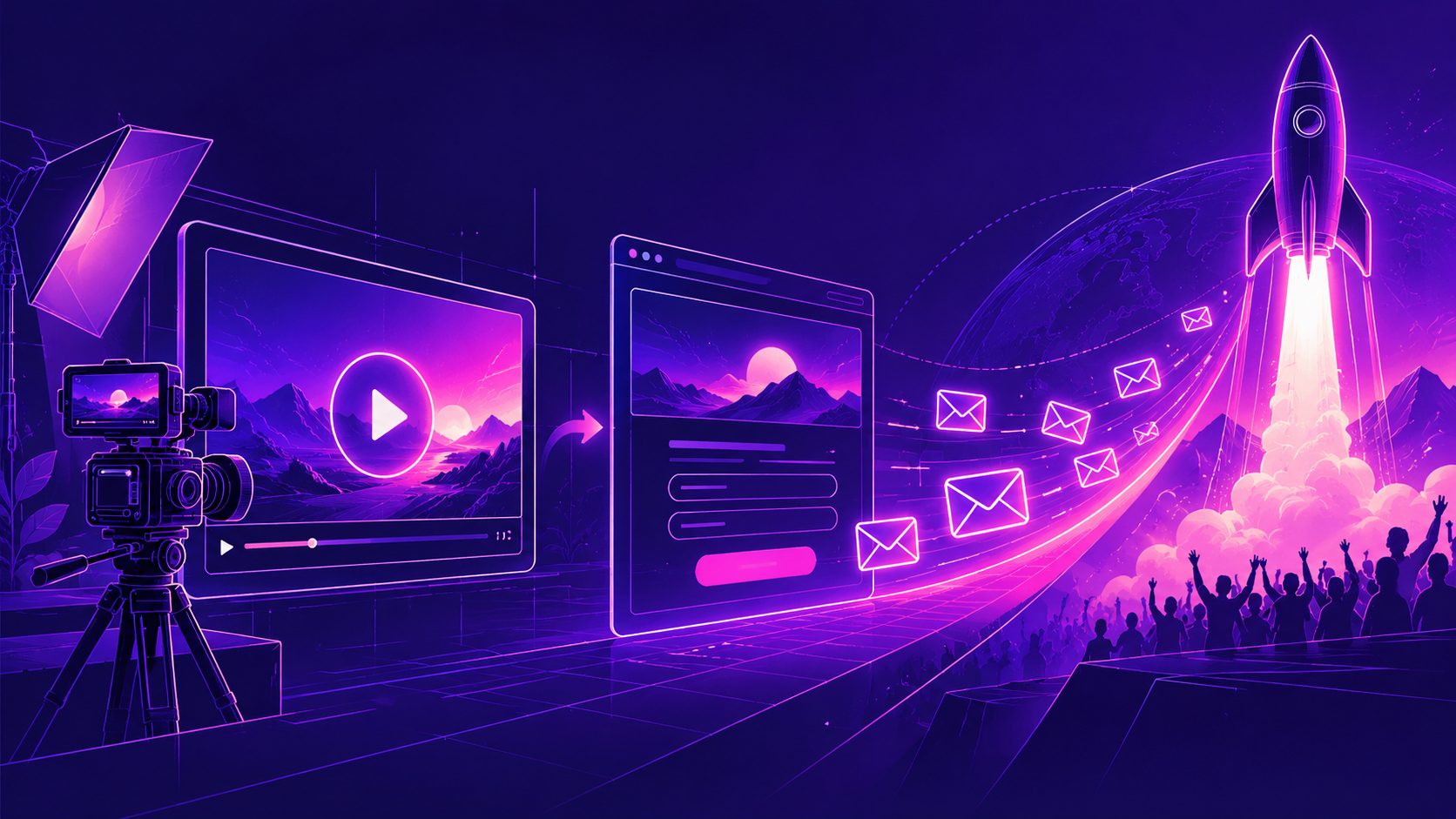
A crowdfunding pre-launch funnel is strongest when the teaser, page, and email sequence behave like one system. The video earns attention, the page earns permission, and the email sequence turns permission into launch-day intent.