
Ecommerce Chargeback Video Evidence: Build a Stronger Proof Pack

Summarize with
Summary
Learn how to turn packing videos into ecommerce chargeback video evidence with timestamped keyframes, delivery records, and a bank-ready proof pack.
By AdsTurbo.ai | Published 2026-11-02 | Updated 2026-11-02
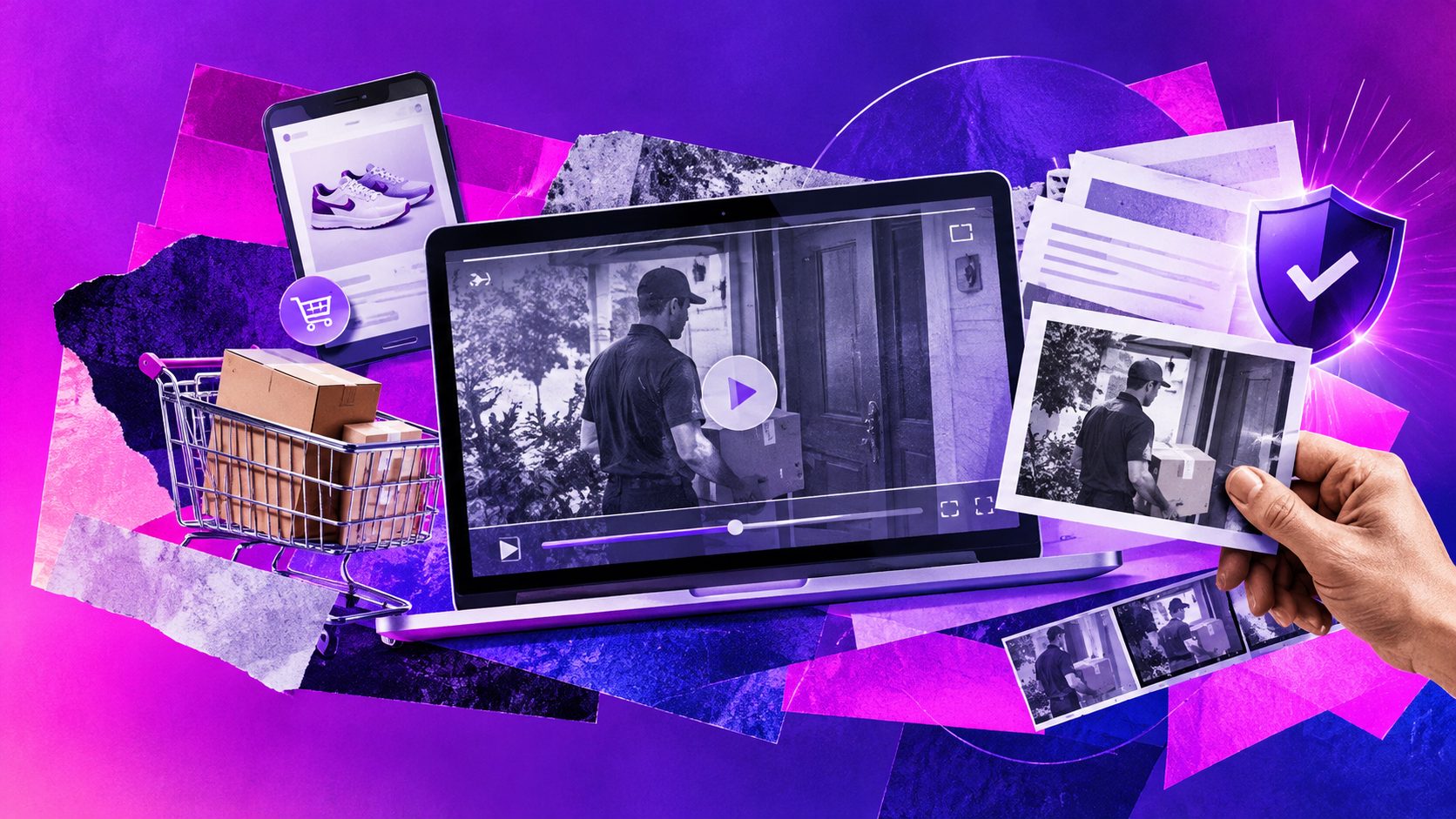
Ecommerce chargeback video evidence is most useful when it proves a specific fact in a format the payment processor can review quickly. A packing or quality-control video alone is rarely enough; the stronger approach combines timestamped video frames, order details, delivery confirmation, customer communications, and policy records into one chronological evidence pack.
What is ecommerce chargeback video evidence?
Ecommerce chargeback video evidence is a visual record showing how an order was inspected, packed, labeled, shipped, or handled before fulfillment. It can help challenge claims such as “empty box,” “wrong item,” “damaged product,” or “product not received.”
However, video is supporting evidence, not a guaranteed win. Shopify’s guidance says merchants should prioritize direct proof such as delivery confirmation, tracking screenshots, and matching addresses before adding customer communications, policies, and supporting context. (help.shopify.com)
The practical implication is important: do not submit a long clip and expect the reviewer to find the relevant moment. Convert the footage into a concise, labeled sequence of facts.
The evidence ladder
Use this order when building a dispute file:
- Transaction identity — order number, item, variant, amount, and customer details.
- Fulfillment proof — packing or inspection frames showing the actual item.
- Shipping proof — carrier, tracking number, destination, and delivered status.
- Customer acknowledgment — messages confirming receipt, use, or order details.
- Policy context — return, refund, shipping, and cancellation terms accepted at checkout.
This structure mirrors the way payment platforms recommend presenting evidence: lead with the strongest direct proof, then add context. (help.shopify.com)
Why a packing video can strengthen a friendly-fraud dispute
A packing video can close the gap between “the merchant says it was shipped” and “this exact product was packed for this exact order.” It is particularly useful when a customer claims the parcel contained the wrong item, was empty, or arrived with missing components.
The video becomes more persuasive when it visibly connects:
- The order or pick-list reference
- The product, variant, color, size, or serial number
- A quality check or quantity count
- The packaging process
- The shipping label or fulfillment timestamp
- The handoff to the carrier, where available
For example, a frame showing a sealed package is weaker than three linked frames: the product before packing, the product inside the package, and the label matching the disputed order. This is an original evidence design principle for ecommerce teams: prove identity before proving shipment.
That distinction matters because proof of delivery does not always prove what was inside the parcel. Conversely, a packing video does not prove delivery. The two records answer different questions and should be submitted together.
Can you submit a video directly with a Shopify chargeback?
Usually, you should not rely on a video file or external video link as your primary Shopify chargeback submission. Shopify’s chargeback instructions state that accepted evidence formats include PDF, JPEG, and PNG, while audio and video files, external links, and requests for additional contact are not accepted in the evidence upload. Shopify also specifies file-size and page limits for evidence submissions. (help.shopify.com)
A better workflow is:
- Preserve the original video internally.
- Identify the exact timestamps that prove the disputed fact.
- Export high-contrast still frames.
- Add short captions and arrows.
- Combine the frames into a compact PDF or image evidence file.
- Place the strongest frame first.
- Link each frame to the order timeline in the written explanation.
This turns a raw operational recording into processor-compatible visual evidence.
How to convert a packing video into a bank-ready evidence pack
1. Start with the dispute reason code
Do not use the same video package for every dispute. Match the evidence to the customer’s claim.
| Dispute claim | What the video should prove | Additional evidence |
|---|---|---|
| Product not received | The order was prepared and handed to the carrier | Tracking, delivery scan, delivery photo |
| Wrong product | Correct SKU, variant, or model was packed | Product listing, order confirmation |
| Empty package | Product was visibly placed inside before sealing | Package weight, carrier records, customer messages |
| Damaged product | Product condition before shipment | Inspection record, packaging method, photos |
| Fraud or unauthorized transaction | Fulfillment was tied to a legitimate order | Address, device or transaction records, customer history |
For a product-not-received claim, Shopify recommends tracking information, delivery confirmation, address verification, and carrier communications for physical products. (help.shopify.com)
2. Extract only decision-making frames
A useful evidence pack normally needs fewer frames than merchants expect. Select frames that answer one question each:
- Frame A: Order reference and item identity
- Frame B: Product condition before packing
- Frame C: Product inside the package
- Frame D: Sealed parcel and shipping label
- Frame E: Carrier handoff or fulfillment timestamp
Add the timestamp, order number, and a one-line explanation below every frame. Avoid decorative screenshots, long transcripts, or unrelated warehouse footage.
3. Build a “frame-to-fact” index
The most overlooked improvement is an index that tells the reviewer exactly what each image proves.
Example:
| Evidence | Timestamp | Fact established |
|---|---|---|
| Frame 1 | 10:42:18 | SKU matches the disputed order |
| Frame 2 | 10:43:02 | Product passed visual inspection |
| Frame 3 | 10:44:11 | Product was placed inside the parcel |
| Frame 4 | 10:45:07 | Label matches destination and order number |
| Tracking record | — | Parcel delivered to the checkout address |
This format reduces interpretation work. Shopify specifically recommends clear evidence labels instead of vague descriptions such as “attached screenshot.” (help.shopify.com)
4. Compress the story, not the proof
Evidence files should be readable, not merely small. Crop irrelevant warehouse areas, use high contrast, and highlight the order number, SKU, label, and timestamp. Shopify advises merchants to keep images legible, use callouts where useful, and comply with file-size limits. (help.shopify.com)
AdsTurbo can support the production side of this workflow with video analysis, clip-by-clip editing, subtitles, AI upscaling, and product-video tools. For a dispute pack, use these capabilities to locate and clarify relevant moments—not to add dramatic effects or alter the underlying record. The original footage should remain preserved separately.
For related fulfillment content, see the Temu damaged goods claim video guide, which applies the same principle of connecting product condition, packaging, and claim-specific proof.
What evidence should accompany the video?
A defensible chargeback response is a timeline, not a media gallery. Include:
- Order confirmation and itemized receipt
- Product page or listing captured near the purchase date
- Billing and shipping address
- Fraud-screening or verification results, where available
- Packing or inspection keyframes
- Carrier tracking and delivery confirmation
- Customer emails, chats, or support tickets
- Refund and return policy accepted at checkout
- Any attempted resolution before the chargeback
For fraud-related disputes, American Express describes compelling evidence that can connect the transaction to the cardholder through elements such as delivery, prior transaction history, email, IP address, or device information, depending on the applicable rules. (americanexpress.com)
Do not claim that a packing video proves the customer personally received the order. State only what the record establishes: the correct item was inspected, packed, labeled, and shipped according to the available records.
Common mistakes that weaken video evidence
Submitting the entire recording
A 20-minute warehouse video creates review friction. Export the relevant seconds as labeled frames and retain the original as an internal archive.
Showing a product without an order connection
A product on a table does not prove it belonged to the disputed order. Include the SKU, order reference, variant, or label connection.
Relying on delivery alone
A delivered scan supports receipt at an address, but it may not resolve a wrong-item or empty-box claim. Pair delivery proof with pre-shipment identity evidence.
Editing the source without preserving it
Heavy edits, overlays, or unexplained cuts can undermine credibility. Keep the original file, document any trimming, and use edits only to create review copies.
Ignoring the customer’s actual allegation
Answer the stated claim directly. If the customer says “wrong color,” show the color and variant. If the claim is “never received,” lead with delivery and address evidence.
Frequently asked questions
Does a packing video guarantee a successful chargeback reversal?
No. Banks and payment processors decide disputes under their own rules, and even strong delivery or fulfillment records do not guarantee a favorable outcome. Shopify explicitly notes that compelling evidence improves a response but does not guarantee a win. (help.shopify.com)
Should merchants send a video link to the bank?
Not as the main Shopify evidence submission. Convert the relevant video moments into accepted image or PDF evidence, then summarize the original recording in the written response. (help.shopify.com)
How long should the evidence pack be?
Keep it as short as possible while answering the dispute. A compact timeline with five to eight highly relevant frames is usually more useful than dozens of repetitive images.
Can subtitles help?
Yes, when they clarify timestamps, order references, or inspection events. They should describe the record, not make unsupported conclusions. AdsTurbo Video Subtitle can generate synchronized captions and export either a captioned video or separate subtitle files.
What is the most important improvement for future orders?
Capture evidence at fulfillment time. Once a chargeback arrives, merchants cannot recreate a missing inspection record or prove what was inside a package after the fact.
Final checklist
Before submitting an ecommerce chargeback response, confirm that the pack:
- Answers the exact dispute reason
- Places direct proof first
- Connects every frame to the order
- Shows product identity before sealing
- Includes delivery and address records
- Uses readable PDF, JPEG, or PNG files
- Preserves the original video separately
- Avoids unsupported accusations
- Explains the timeline in plain language
For stores producing frequent product and fulfillment content, AdTurbo’s ecommerce video workflow can help organize product visuals, clip-level edits, subtitles, analysis, and localized creative production. Use the resulting evidence carefully: clarity, chronology, and factual accuracy matter more than production polish.