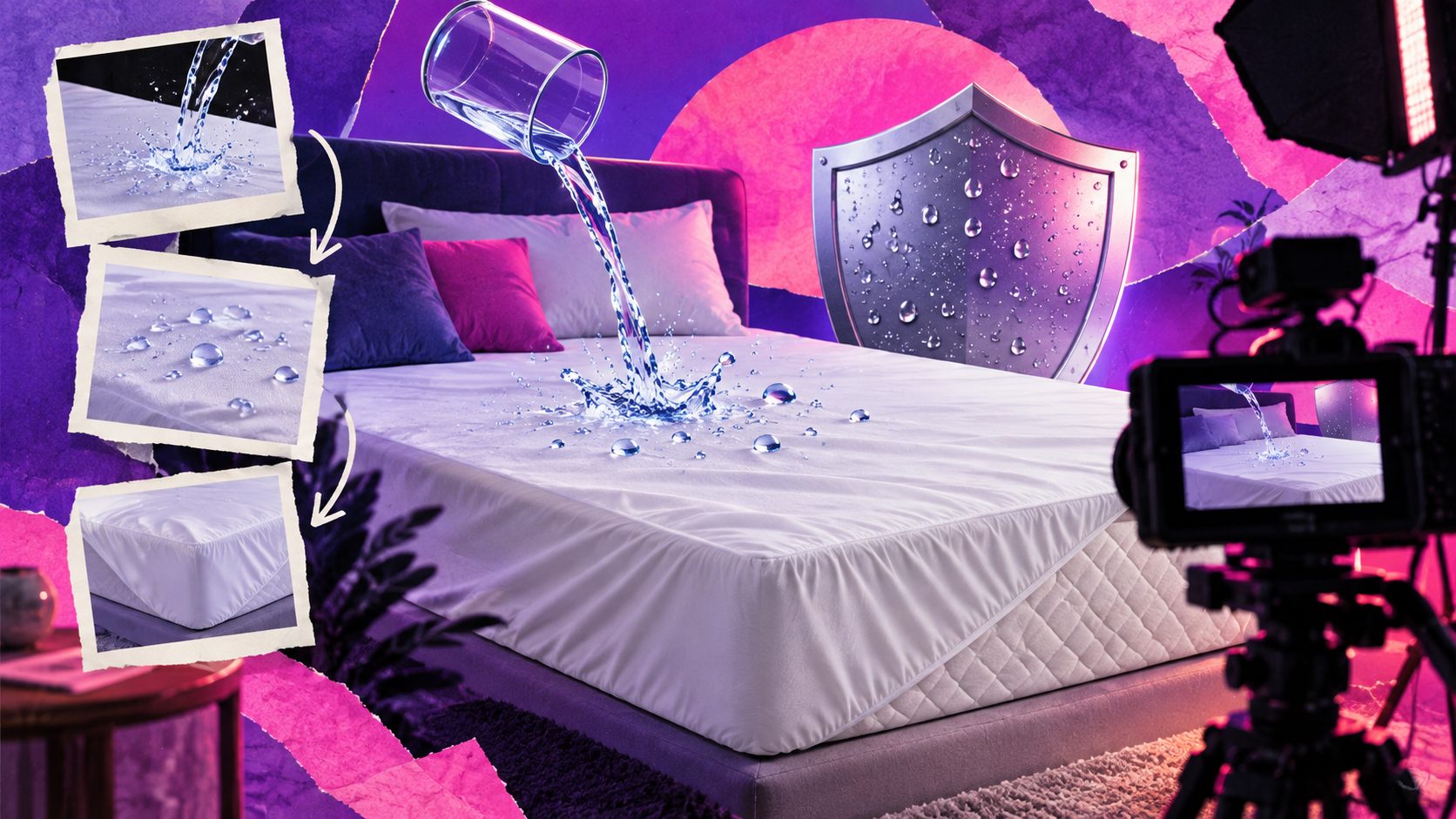
Waterproof Demonstration Video Ad Small Appliances: A Trust-First Guide

Summarize with
Summary
Learn how to storyboard safe waterproof and leak-resistance demos for small-appliance ads, with shot lists, scripts, and AI production workflows.
By adsturbo.ai | Published 2026-10-31 | Updated 2026-10-31
A waterproof demonstration video ad small appliances campaign should prove one narrow customer concern without creating a dangerous spectacle. For kitchen and personal-care products, the strongest creative shows where water can reach, what remains protected, and what the buyer should never do. The result is more credible than a dramatic immersion stunt and easier to adapt into short-form ecommerce ads.
What should a waterproof appliance ad actually prove?
A waterproof or water-resistant demonstration ad should prove a defined use condition, not imply that every part of an electrical appliance can be submerged. The video must distinguish between splash resistance, washable components, sealed controls, and full immersion—claims that are not interchangeable.
Electrical safety guidance consistently warns consumers to keep energized appliances away from water. A GFCI also detects current imbalance rather than simply “detecting water,” so a breaker that does not trip is not proof that a wet appliance is safe. (abrelectric.com)
For ecommerce creative, frame the proof around three questions:
- Where may water appear? Show splashes, steam, rinse water, or a damp hand only when that reflects the product’s intended use.
- Which component is protected? Use a macro shot of a sealed button, covered port, removable washable head, or raised housing.
- What is the safety boundary? Add visible text such as “Do not immerse the motor housing” when appropriate.
This structure creates trust because the ad demonstrates a use case rather than making an unlimited waterproof promise.
Which shots work best for kitchen and personal-care appliances?
The most persuasive waterproof demos use controlled, repeatable shots that let viewers inspect the result. A practical sequence is:
| Shot | Kitchen example | Personal-care example | Viewer question answered |
|---|---|---|---|
| Hook | Water splashes beside the control panel | Damp hand reaches for the button | Can it handle the real routine? |
| Detail | Close-up of the sealed interface | Close-up of the protected charging area | Where is the protection? |
| Demonstration | Wipe, rinse, or splash within the stated use | Rinse a removable attachment separately | What gets wet? |
| Proof | Product powers on after drying | Attachment is cleaned and reinstalled | Does it still work as intended? |
| Boundary | Red “Do not immerse” overlay | “Keep electrical base dry” overlay | What must the buyer avoid? |
For kitchen products, use water, condensation, or food-cleanup scenarios that resemble daily use. For personal-care products, show the bathroom context without placing a powered device into a sink or container. The visual language should make the safe boundary as memorable as the benefit.
Consumer testing publishers also tend to emphasize observable performance—such as timing, output quality, or cleanup—rather than relying on a product beauty shot alone. (consumerreports.org)
How do you design a safe leak-resistance test scene?
A safe ad scene separates demonstration from electrical testing. Do not create a live-water experiment with a plugged-in appliance, expose a power cord to water, or encourage viewers to reproduce a risky stunt. Instead, film the water-contact portion with the product unplugged, isolate removable parts, and use approved product documentation to define the claim.
A useful five-step production framework is:
- Define the claim. Write “handles countertop splashes” or “washable attachment,” not simply “100% waterproof.”
- Mark the test zone. Use tape, a tray, or a graphic outline to show the permitted water-contact area.
- Show the controlled action. Use a measured pour, spray, wipe, or rinse rather than chaotic flooding.
- Show the inspection. Film droplets being wiped away, the seal remaining closed, or the removable part being cleaned.
- State the limitation. Keep the motor, plug, charging port, or control base outside the water unless the manufacturer explicitly documents otherwise.
For a product page or paid ad, this restraint is a conversion advantage. It prevents the creative from looking like a misleading “viral test” and gives customer-support teams a clearer claim to defend.
What is the best 20-second script for a waterproof demo?
A short script should answer the safety objection before introducing the sale. This template works for a countertop appliance, grooming tool, or cleaning-focused product:
0–3 seconds — Hook
“Kitchen messes happen fast. Here’s the area designed for everyday splashes.”
3–7 seconds — Product boundary
“Notice the covered control surface and the protected housing.”
7–13 seconds — Demonstration
“After use, wipe the exterior with a damp cloth. The removable component rinses separately.”
13–17 seconds — Proof
“Dry the parts, reassemble, and use the product according to its instructions.”
17–20 seconds — CTA
“See the full care guide and choose the setup for your routine.”
The important creative decision is the wording. Avoid phrases such as “safe underwater,” “shockproof,” or “completely leak-proof” unless the exact product has documented support for those claims. A demonstration should narrow uncertainty, not invite the viewer to test the limits.
For more proof-oriented ecommerce structure, see this guide to turning product FAQs into video ads. A waterproof concern is often just one FAQ inside a larger purchase objection set.
How can AI generate more variations without weakening trust?
AI is most useful after the proof logic is fixed. The same controlled demonstration can become multiple creative variants for different audiences, placements, and languages:
- Kitchen variant: spills near the control area during meal preparation.
- Bathroom variant: damp-hand operation and separate cleaning of an attachment.
- Care-focused variant: cleanup steps, drying time, and storage.
- Comparison variant: a protected area versus an explicitly marked “keep dry” area.
- Localization variant: translated voiceover, captions, and on-screen safety labels.
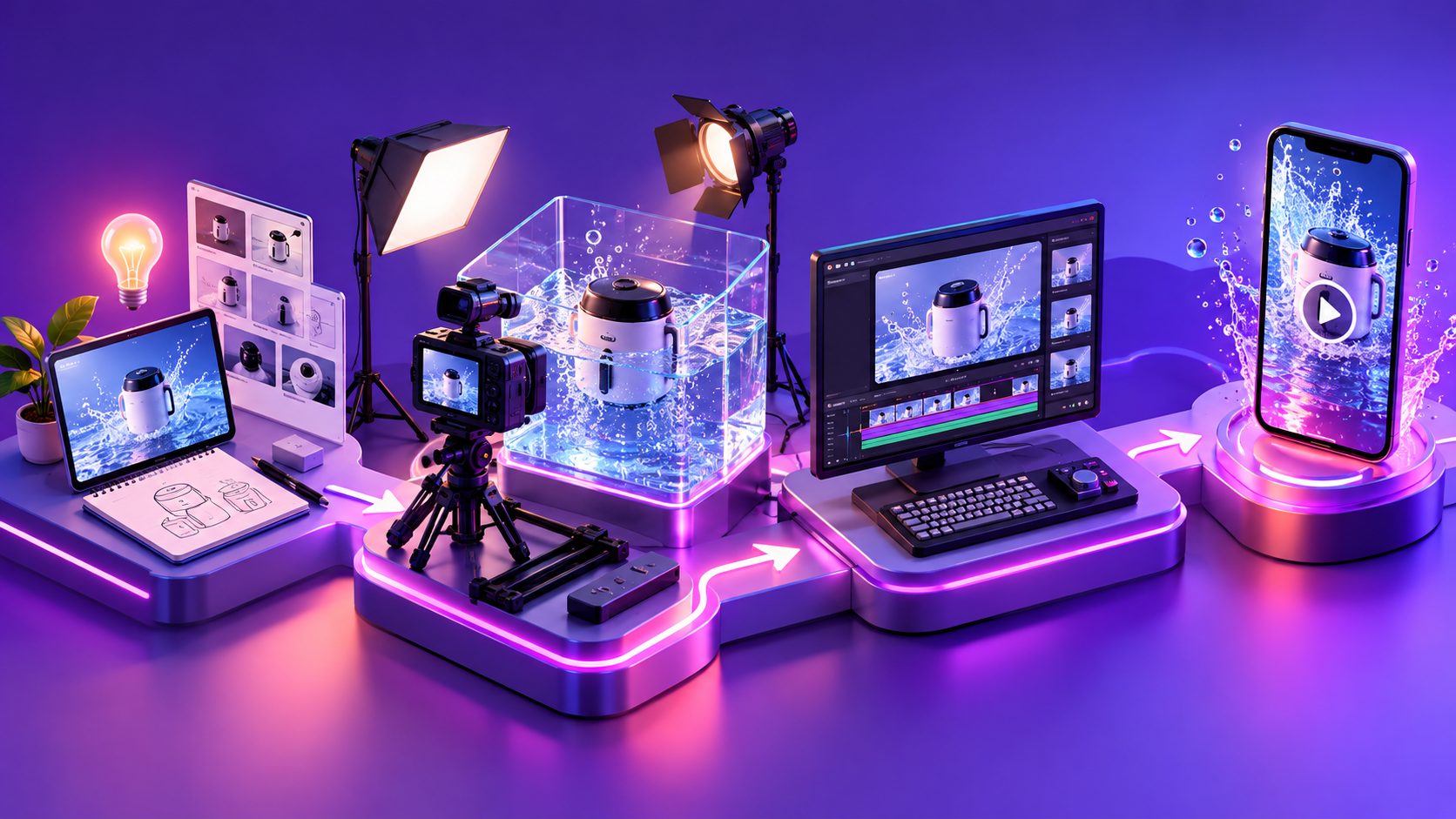
AdsTurbo supports product video generation from JPG or PNG product images, as well as ad cloning, video translation, subtitles, background replacement, AI upscaling, and character replacement. Its video subtitle workflow can create synchronized captions and export either a captioned video or a separate subtitle file. These capabilities are useful for producing platform-specific versions without changing the underlying safety message.
Use product photos to create low-budget video ads when the product is available but a full shoot is not. For an existing winning concept, ad cloning for ecommerce video variants can help preserve the original pacing and CTA while adapting the product proof.
A practical rule: never let AI invent a water-contact zone that the source material does not establish. Keep the product image, demonstration action, text claim, and final disclaimer aligned.
How should the ad be adapted for TikTok, Reels, and Shorts?
Short-form placements often begin without sound, so the first proof must work visually. Amazon’s video-ad guidance similarly emphasizes that sponsored video ads may appear muted by default, making readable on-screen communication important. (device.report)
Use these editing choices:
- Put the water-contact action in the first three seconds.
- Add large captions for “splash area,” “removable part,” and “keep base dry.”
- Use a 9:16 master for vertical placements, then reframe for 1:1 and 16:9.
- Keep the product boundary visible in every crop.
- End with a specific CTA, such as “View care instructions” or “Shop the complete setup.”
- Avoid rapid cuts during the actual proof moment; viewers need enough time to see what happened.
AdsTurbo’s event-poster workflow can also create promotional visuals in multiple aspect ratios and languages, which helps coordinate the video with sale banners, product-page graphics, and campaign assets.
Common mistakes in waterproof demonstration ads
Mistake 1: Calling every water-resistant feature “waterproof”
A washable attachment does not automatically make the motor housing waterproof. Name the component and the use condition precisely.
Mistake 2: Showing an unsafe imitation challenge
A dramatic sink or bathtub scene may attract attention but can encourage misuse. Replace it with a controlled, unplugged, component-level demonstration.
Mistake 3: Ending before the inspection
The splash is not the proof. Show the wipe-down, drying step, reassembly, or post-use check that completes the story.
Mistake 4: Hiding the limitation in tiny text
If the base must stay dry, make that instruction readable on mobile. A clear limitation can increase credibility instead of reducing conversions.
Mistake 5: Using AI to exaggerate the product
Generated water, reflections, or motion can make a product appear sealed when it is not. Treat AI as an editing and variation layer—not as evidence.
Frequently asked questions
Is a splash test enough to call a small appliance waterproof?
No. A splash test only demonstrates the specific exposure shown. Use the manufacturer’s documented terminology and identify the protected component.
Can a plugged-in appliance be used in a water demonstration?
Do not stage or reproduce a live-water electrical experiment for an advertisement. Demonstrate approved use conditions safely and keep electrical connections away from water.
What should a product video show first?
Show the buyer’s real concern first: a countertop splash, damp hand, cleanup moment, or removable part. Then reveal the protection and its boundary.
Can AI create a waterproof product demo from one product image?
AI can help generate product-video variations from an image, but it should not invent unsupported water-resistance claims. Supply accurate product references, approved copy, and clear safety limits.
How can sellers test multiple ad angles?
Create separate variants for cleanup, splash exposure, removable-part care, and safety boundaries. Change one major variable at a time so performance differences are easier to interpret.
For a broader ecommerce creative workflow, AdsTurbo also supports product videos, subtitles, translation, image generation, and asynchronous task processing through status polling or Webhook completion events. Explore the AdsTurbo platform to build proof-led product creative around your existing catalog.