TikTok Shop Affiliate Sample Video Generator: Test Creator Demand Before Sending Samples

Summarize with
Summary
Learn how sellers can use a TikTok Shop affiliate sample video generator to test hooks, product angles, and creator interest before shipping physical samples. Build smarter pilot campaigns with AdsTur
By adsturbo.ai | Published 2026-11-09 | Updated 2026-11-09
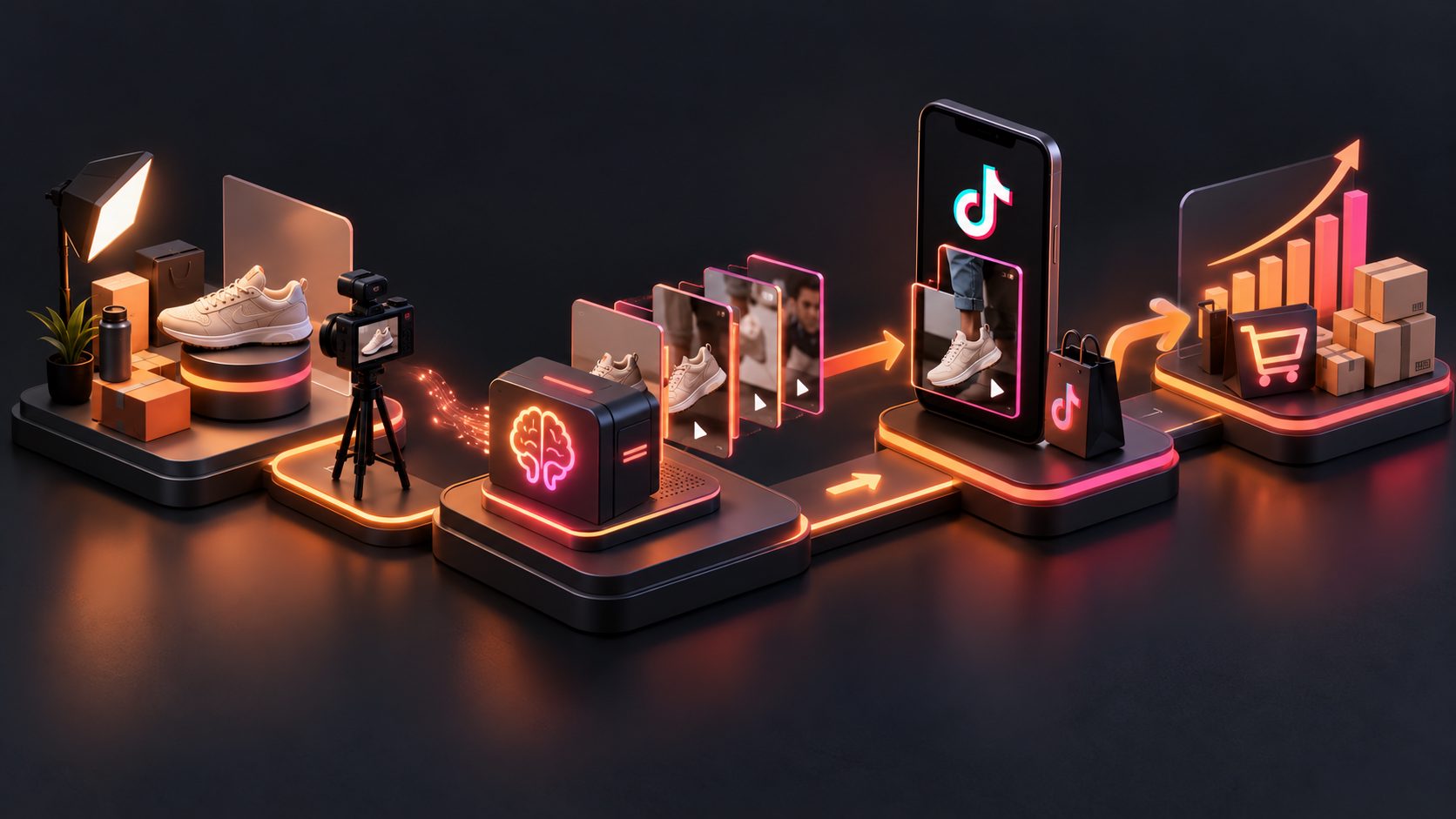
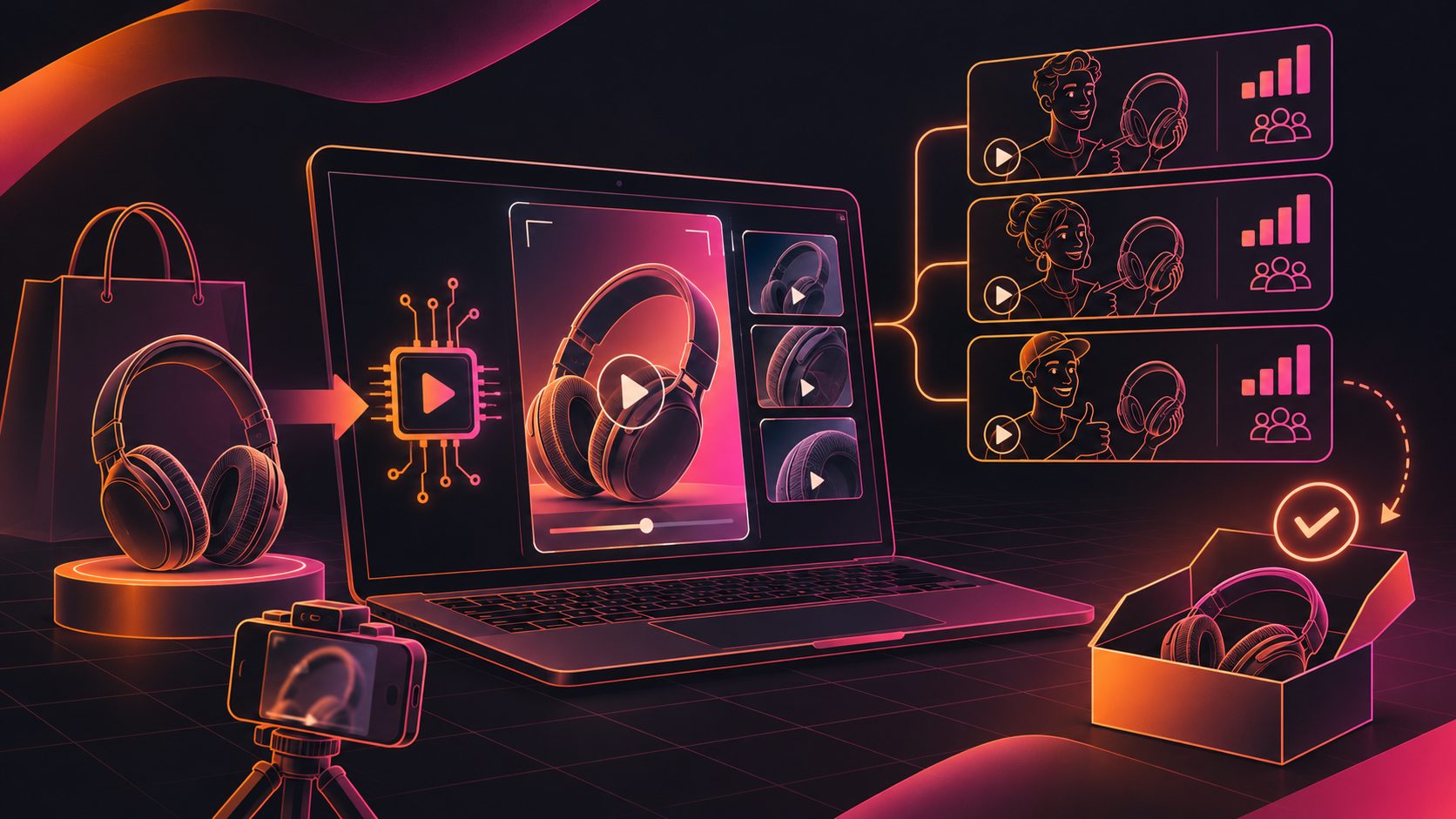
A TikTok Shop affiliate sample video generator helps sellers create realistic product-video concepts before shipping inventory to creators. Instead of sending samples based only on follower count, sellers can test hooks, benefits, formats, and creator fit first—then send physical products to the partners most likely to produce useful shoppable content.
What is a TikTok Shop affiliate sample video generator?
A TikTok Shop affiliate sample video generator is an AI workflow that turns product information, images, selling points, and creative references into short-form sample videos for affiliate recruitment and concept testing.
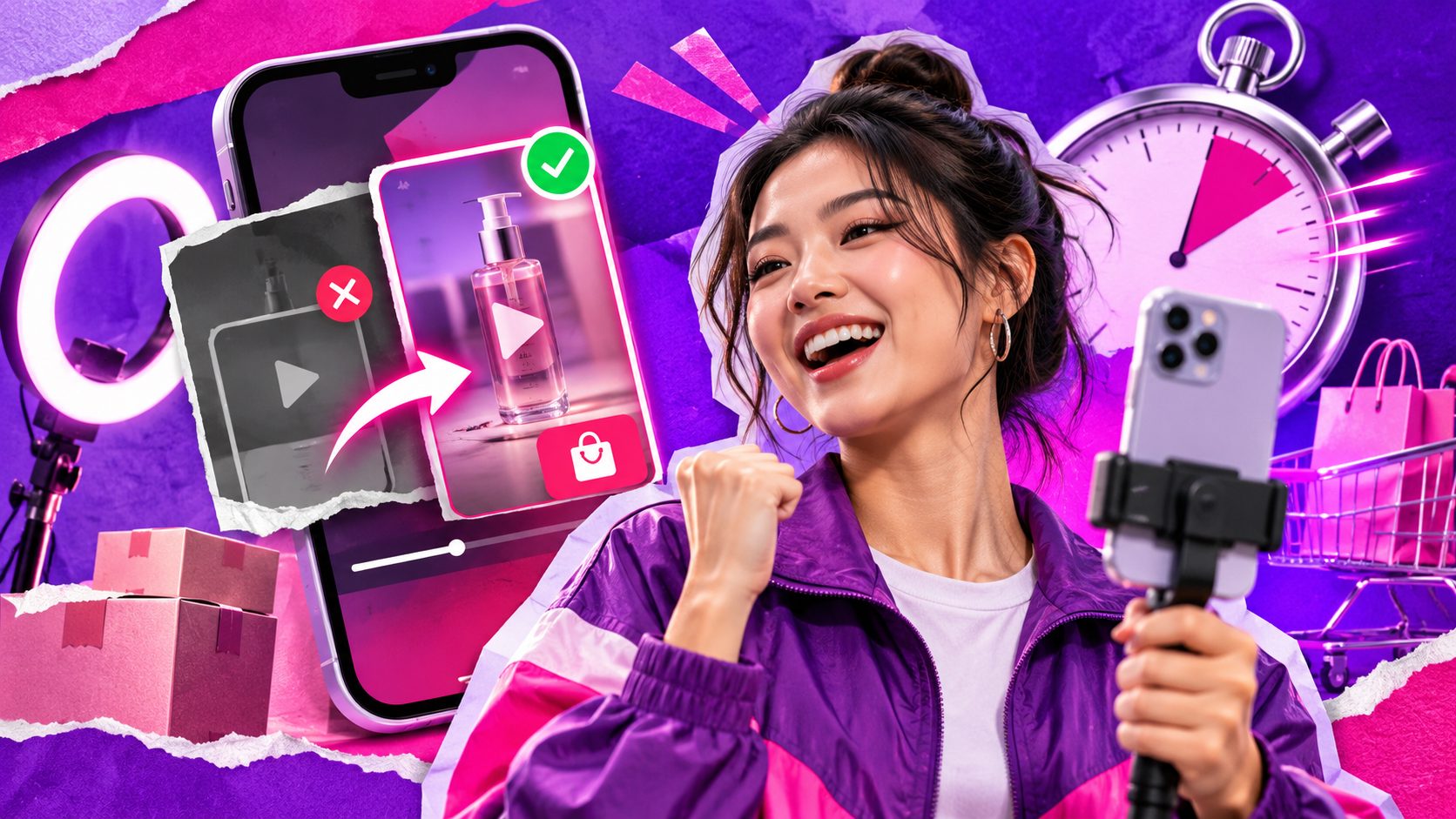
The purpose is not to pretend that a creator has used a product they have never received. The better use is to create a preview: a visual example of the proposed angle, structure, opening hook, product demonstration, and call to action. Sellers can send that preview to potential affiliates and ask whether the concept fits their audience before mailing a sample.
TikTok Shop’s official seller guidance describes samples as part of creator collaborations, with sellers able to approve or reject requests and creators expected to publish content after receiving products. (seller.tiktok.com)
Why test the video before sending the product?
Physical samples create several risks:
- The creator may not understand the product’s strongest benefit.
- The proposed angle may not match the creator’s audience.
- The sample may be sent before the seller knows which hook deserves testing.
- Multiple creators may produce nearly identical videos.
- Shipping costs can accumulate before the campaign has a clear creative direction.
A preview video reduces uncertainty. It gives the creator something concrete to react to: “Would your audience respond to this demonstration?” is a more useful question than “Would you like a free sample?”
How should sellers use AI sample videos in affiliate outreach?
The most effective workflow separates creative validation from product validation. AI can help test the first; a real sample is still needed for honest hands-on claims, sensory reviews, fit checks, performance tests, and demonstrations that require physical inspection.
1. Start with one product and three distinct angles
Create three concepts rather than one polished video:
- Problem-first angle — open with the customer frustration.
- Proof-first angle — show a measurable or visible product benefit.
- Use-case angle — place the product in a recognizable daily situation.
For example, a home organization product might use:
- “The cabinet problem that wastes space every morning.”
- A before-and-after storage demonstration.
- A short routine showing how the product fits into a busy household.
This creates a small creative test set. The objective is not to choose the prettiest video. It is to identify the angle a creator can naturally adapt.
2. Keep the preview honest
Label the asset as a concept, mockup, or sample brief when sharing it with creators. Avoid unsupported claims, fabricated testimonials, or language implying that the creator personally tested the item.
A practical structure is:
- 0–2 seconds: visual problem or curiosity hook
- 2–6 seconds: product introduction
- 6–12 seconds: demonstration or use case
- 12–16 seconds: key benefit and objection handling
- Final seconds: soft call to action
The creator can then replace AI-generated scenes with real footage after receiving the product.
3. Ask for a low-friction creator response
Instead of asking an affiliate to commit immediately, ask three questions:
- Which opening would you use for your audience?
- Would you demonstrate, review, compare, or unbox this product?
- What proof would you need before recommending it?
Their answers reveal more than surface-level engagement. A creator who suggests a specific demonstration has likely understood the product. A creator who only asks about commission may not be the right fit for an early creative test.
What should the seller measure before shipping samples?
Most existing guidance focuses on how creators request samples. The more useful seller-side question is whether the proposed content has enough clarity to justify a shipment.
A simple Sample Readiness Score can be calculated from five factors:
| Factor | Question | Score |
|---|---|---|
| Hook clarity | Is the customer problem obvious in two seconds? | 0–2 |
| Product visibility | Can viewers understand what the item is? | 0–2 |
| Demonstration potential | Can the benefit be shown, not merely claimed? | 0–2 |
| Creator fit | Can the creator adapt the concept naturally? | 0–2 |
| Compliance confidence | Can the video avoid unsupported claims? | 0–2 |
Send a physical sample when the concept reaches 7 or more out of 10 and the creator can explain how they would film it. This is an original operating framework, not a TikTok Shop requirement. Its value is prioritization: it turns sample distribution into a testable decision rather than an open-ended gifting process.
A useful pilot design
For a new product, prepare:
- 3 creative angles
- 2 opening hooks per angle
- 3 creator types
- 1 physical sample for each promising creator
That produces a small matrix instead of a random outreach list. After the first wave, compare creator replies, content quality, watch behavior, clicks, and sales—not just views.
How AdsTurbo can support the pre-sample workflow
AdsTurbo provides product-video generation tools that can turn a JPG or PNG product image into short-form ecommerce video concepts. Product Video can be used for product reviews, introductions, and demonstrations, while the platform also supports ad cloning, subtitles, background replacement, video translation, motion control, and AI upscaling.
For sellers testing affiliate concepts, a practical workflow is:
- Upload a clear product image.
- Add the product’s core selling points and promotion details.
- Generate several product-video directions.
- Edit the video clip by clip.
- Add subtitles formatted for short-form platforms.
- Share the preview as a creator brief.
- Ship samples only after the creator selects a viable angle.
AdsTurbo’s TikTok Shop product video generator workflow offers a related framework for building product-focused short videos, while its bulk AI video ad testing workflow is useful when a seller needs multiple creative variations.
The platform also supports 300-plus AI actors and more than 100 product-ad templates. These assets can help sellers demonstrate different presenter styles, but the preview should remain a creative reference until a real affiliate has the product in hand.
How is a sample preview different from a finished affiliate video?
A sample preview is designed to win creator interest and validate a content direction. A finished affiliate video is designed to represent a real product experience and drive measurable action.
| Sample preview | Finished affiliate video |
|---|---|
| Tests the hook and structure | Shows actual product experience |
| Can use product photos and concept scenes | Should use accurate product footage |
| Helps a creator decide whether to collaborate | Supports a published shoppable post |
| Focuses on creative alignment | Focuses on trust, proof, and conversion |
| Should disclose its conceptual nature | Must follow applicable platform and advertising rules |
This distinction matters because TikTok Shop sample programs are built around creators receiving and promoting products. Official guidance says creators may need to publish sample content within a specified period, while seller approval and fulfillment remain part of the workflow. (seller.tiktok.com)
Common mistakes to avoid
Sending samples before defining the content test
A sample without a creative hypothesis produces content that is difficult to compare. Define the hook, proof point, and target customer before shipment.
Using one generic video for every creator
Beauty, home, fashion, and electronics creators may need different demonstrations. Change the angle, not only the presenter.
Treating AI visuals as product proof
Do not use generated scenes to imply durability, fit, taste, performance, or personal experience that has not been verified. Use real samples for claims requiring inspection or use.
Optimizing for views alone
A high-view video may still produce weak product understanding. Track whether viewers click, ask relevant questions, add to cart, and convert.
Frequently asked questions
Can sellers create an affiliate preview without sending a sample?
Yes. Sellers can create a concept video from product images and selling points, then use it to test creator interest before shipping. The preview should be clearly presented as a concept and should not imply hands-on use.
Does an AI preview replace a physical product sample?
No. It replaces some early-stage creative guesswork, not product verification. Creators still need the actual item for honest reviews, demonstrations, and experience-based claims.
What product images work best?
Clear JPG or PNG images with the product centered on a simple background are a strong starting point. AdsTurbo Product Image supports JPG and PNG uploads, and clean product photography on a solid-color background is recommended for clearer generation.
How many concepts should a seller make first?
Three concepts are usually enough for an initial pilot: a problem-first hook, a proof-first demonstration, and a use-case format. More variations can be added after one direction shows stronger creator fit.
Can this workflow support multiple markets?
Yes. AdsTurbo supports video translation, subtitles, and localized creative workflows. A seller can test the same product angle with different languages, presenters, and audience contexts before investing in larger sample distribution.
Final takeaway
A TikTok Shop affiliate sample video generator is most valuable as a decision tool, not a substitute for product experience. Use AI previews to test hooks, clarify the creative brief, compare creator fit, and prioritize sample shipments. Then let real creators handle the hands-on product proof that makes affiliate content credible.
For ecommerce teams building repeatable creative tests, AdsTurbo’s AI ecommerce video platform can support product-video generation, subtitles, localization, ad cloning, and clip-level editing in one workflow.